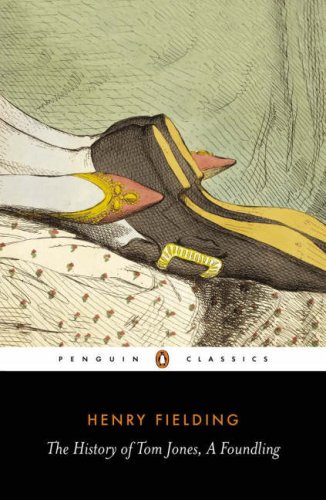
 Henry Fielding was a model for Charles Dickens. After all, Tom Jones was one of the first English novels. The use of coincidence in Tom Jones and David Copperfield adds a lot of suspense, builds expectations, and then, ironically, catharsis. This is the way I use irony in metamodern literature, instead of the all too frequent postmodern sarcasm.
It’s important to remember that a fictional story operates around the narrator’s rules. Instead of creating a dystopian world based on a number of futuristic suppositions, as in Super Sad Love Story or Infinite Jest, I’d prefer to use my poetic license to manipulate Fortuna.
Modern technology makes coincidence a tad less credible. Like if you’re trying to avoid a girl who wants to see you during July 4th, you can stalk her on Facebook or Twitter or Foursquare and see her plans, and avoid her deliberately, screen her calls, don’t respond to her texts. But before smartphones and the internet, you had to hope you didn’t run into her at that July 4th barbecue, that your circles of friends aren’t concentric. At least I’m not writing a screenplay–when viewers’ expectations aren’t met, they get pissed. In fiction irony is much more acceptable. It is important though to create coincidence without heavy-handedness; it should be entirely natural, pass off as just another of life’s random events.
A synchronicity, even.
Where plot isn’t concerned, digressions make a work more interesting. For example I tried it out today at work when I was writing about mouse traps and I started going on about the Black Death and whether a king had ever died from it because I remembered the conversation I had with Kitty on Saturday night after we went to Lit Lounge, which had a lot of suits because there had been a wedding. When I went upstairs and saw the bathroom line I danced a little and an older woman, the kind who had been once attractive, wanted to dance with me but her husband was right there and even though it was my jam–“When Doves Cry”–I didn’t feel comfortable because of the looks the older guy gave me. But it turns out only one Princess died, Joanna, who was betrothed to a king of Portugal. She was the daughter of Eddie I, who I believe lived in the Tower of London, and I began to think about that trip I took with Matthew and that fifty foot long cannon, which I think was Russian. They must be really good at building cannons, because I remember those huge cannons and steel bells in the Kremlin that weigh like fifty tons. There must be a word for someone who makes that because it wouldn’t just be an ordinary blacksmith, would it? Cannonsmith? If you know you should tell me because someone tweeted the other day what I’ve always known which is that the more words you know the better your writing will be, because even though you know a lot of different ways to talk about the sky, for example, the word itself, from the Norweigan, is so beautiful that you can better appreciate it for its simplicity. So the practice I had at work was good for improving my metamodern style.
 Daniel the Writer
Leave a comment