 Last night I got some goodies, among which is D.H. Lawrence’s “Selected Critical Writings. Now you know how I feel about D.H. Lawrence and I think that after Conrad and Hardy of the late 19th century, he and Joyce were the foremost Anglophone novelists of the early 20th. So of course the first essay I read is “The Future of the Novel.”
First off, Lawrence is upset about the self-consciousness of the novel. He prefigures postmodernism by noting that this self-consciousness is really in its early stages, that it is abosrbedly concerned with “what I am:” “It has always youthfully hoped for the best, and felt rather sorry for itself on the last page.”
And you know me, always thinking about the future and post postmodernism, the new state of things, looking at events such as the Arab Spring and OccupyWallStreet, and hunger protests in India and the potential demise of the E.U. and saying, hey maybe we’re on the verge of a new epoch, one which coincides with everyone’s unconscious preoccupation with the end of the world that’s a little more than a year away.
Then Lawrence is like, the best novels are Plato’s Dialogues, and then philosophy and the novel split, the former getting too abstract, the latter too sloppy. How do we bring them back together? How do we depict new human emotions? How does the novel break through?
Now I’m just thinking out loud here: what if the novel becomes not as self-conscious as it does subconscious, what if we start out with a philosophical proposition, and then bring in examples which logically follow? Forget chronology because philosophy has no sense of time. Sprinkle in some new human emotions, and make not necessarily the novel shorter, but the chapters shorter. I realize this kind of speculation is still rather abstract.
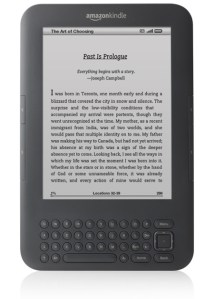
What comes next? If this is the question then the answer is prologue. It isn’t technology, not yet, because we’re still learning how to feel comfortable with substituting new processes for old. It isn’t to repeat what was done a hundred years ago, or fifty years ago. It’s to go even farther back, to understand that we come at the turn of a millennium, and that we have not just a hundred, but a few thousand years of tradition to appreciate.
Our formal techniques may echo Joyce and Pynchon, Woolf and Wallace, but the stories we tell in our era have to go even farther back. They have to revert to the first true novels: Plato’s Dialogues. The dialogue in its ironical re-positioning often ends with a metaphorical fable or allegory about the gods. Metaphor is what myth is based on because in it humans anthropomorphize God.
After Plato, philosophy became less playful and more precise, more Aristotelian. A simple premise, say good versus evil, carries a story to its logical conclusion, framed in a new, imaginary mythical realm. This is the metamodern novel.


Leave a comment