It was the best of times, it was the worst of times. Dickens’ famous first sentence still resounds so clearly because of its universality – every age can apply it to their own. But that doesn’t mean we’re all vain; it means that we all need to focus on what makes our moment special.
Jonathan Franzen won rave reviews for his book Freedom, inspiring a new word – Franzenfreude – to describe the feelings of anger from mass entertainment writers as they deplore his Time cover and title of “Great American Novelist.” It is special not for what it attempts to do, but for what it does. That is, there are no attempts toward a stylistic avant garde art as he admitted there were in The Corrections, but instead, he depicts a culture through a novelistic lens.
That doesn’t mean that avant garde art doesn’t have a place in today’s society. The reason Franzen has been so widely lauded is that he has reverted to expressing human psychology simply – the way many of the best novels do. That doesn’t mean there’s not room for innovation. While the specialization of last decade’s novels – the delving into ethnic family histories, the intricate layers of narrative and information – was arguably the end of postmodernism, we are still in the end of that movement, according to Frederic Jameson.
Everyone is in a tizzy, but we have still yet to fully embrace a new era, at least artistically. It seems that political revolution breeds artistic revolution. Modernism took at least the first 20 years of the 20th century to begin, and was a response to a catastrophic war. Postmodernism was a response to JFK’s assassination and the race riots of the 60’s. Let’s hope that metamodernism, or whatever they will call it, won’t need the same kind of catalyst.
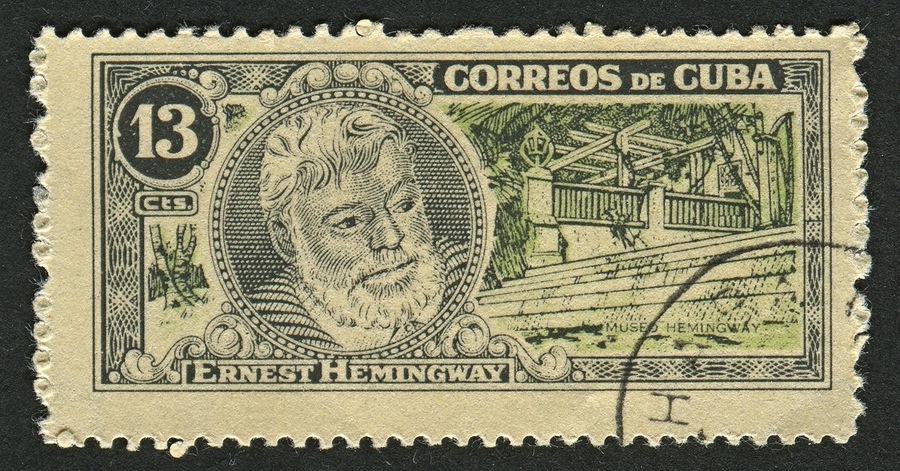
Imagist, objectivist, metamodern, they all share one thing in common: lack of association. I’m reading A Farewell to Arms right now, after having saved it for this moment for years. I’m struck by the imagist descriptions of drinking. Hemingway and his Iceberg Theory were part of the Ezra Pound-led imagist group. It goes something like this: any time we refrain from associating our own subjective feelings with an image, it becomes crisper, more symbolic, realer, closer to a Platonic ideal and less arbitrary. Let’s try to write like this in our metamodernist era. Here’s my try, in the style of Hemingway:
Hemingway’s Imagism (My Attempt)
The porch was made of wooden planks and surrounded by corrugated steel. The night was cold and hard and there was little that could be done to stave off the wind. But what we did was drink and that was enough. The glass of the stout was colder than the beer itself and chilled it in its glass. When we had finished I walked outside to my bike.
It had a new crank, a new seat twice over, countless wheel truings, new tires, brake cables, lock and headlights. I had ridden a thousand miles on it and it lay against the wall the way a woman would lean against a pillow, arm under her head.
I rode it home and, hungry from the stout, took salami from the fridge and cut it carefully so that the herbs it had been preserved in did not come off on the clean table. She had cleaned it for the party. But I was drunk and hungry and wanted to eat the salami quickly so that my stomach would stop growling, but when I cut through the meat, although I cut slowly and carefully so as not to cut through its plastic wrapping, still traces of herbs were left on the bamboo cutting board.
Daniel Adler‘s Imagism
The mornings in the spring and summer when I would wake and look out the kitchen window at the glowing early-morning sky and train tracks, then settle onto the couch for morning work before showering and boiling water for pasta, then eating and skating in the ever-warm sun to the cafe for a few hours before coming back to the apartment and preparing for my girlfriend to return from her work day. Already my body warms with nostalgia when I imagine the click of her heels against the wooden floor when she arrived…
Or that week we broke up and it rained all week and I spent countless hours in that cafe DTUT on the Upper East Side, trying to accustom myself to that lifestyle, that 2nd avenue lifestyle of longing to be closer to the park, farther downtown, and the long hot muggy evenings that faded into a quiet blackness interrupted only by an eighteen wheeler rattling down the street. Park Avenue, asking doormen if their buildings are hiring, and at night drinking beer, cold beer in the heat of the fourth-story apartment. That afternoon I met her at the Italian restaurant in Macy’s and had the squid ink pasta, rich and creamy red sauce, china reflective and heavy and her lioness hair curling over her shoulders, her big bag packed with clothes for a week in Naples.
A new apartment, coming home, feeling settled, the evenings spent at my desk looking out the window, already feeling the slight draft and the salt lamp leaking ionic juice onto the wood, curious passers-by flashing a glance through the steel cage that covers the window at me, me imagining being them looking up at me, this guy at his perch, with his ninety-degree rotated iPad glowing in the apricot light of a salt crystal lamp…Those Saturday afternoons after biking home from Williamsburg with the weather cooling and dismounting our bikes in the bus spot in front of our apartment, with the projects foursquare and the parked cars in front of our window, the bus stop a disembarkation pad specifically for us, and my brother coming over in the lengthening shadows of September and now, now the quickly cooling air of October and November and a new era, one that will undoubtedly provide me with even more raw experience—with contentment and struggle.
 Daniel the Writer
Leave a comment